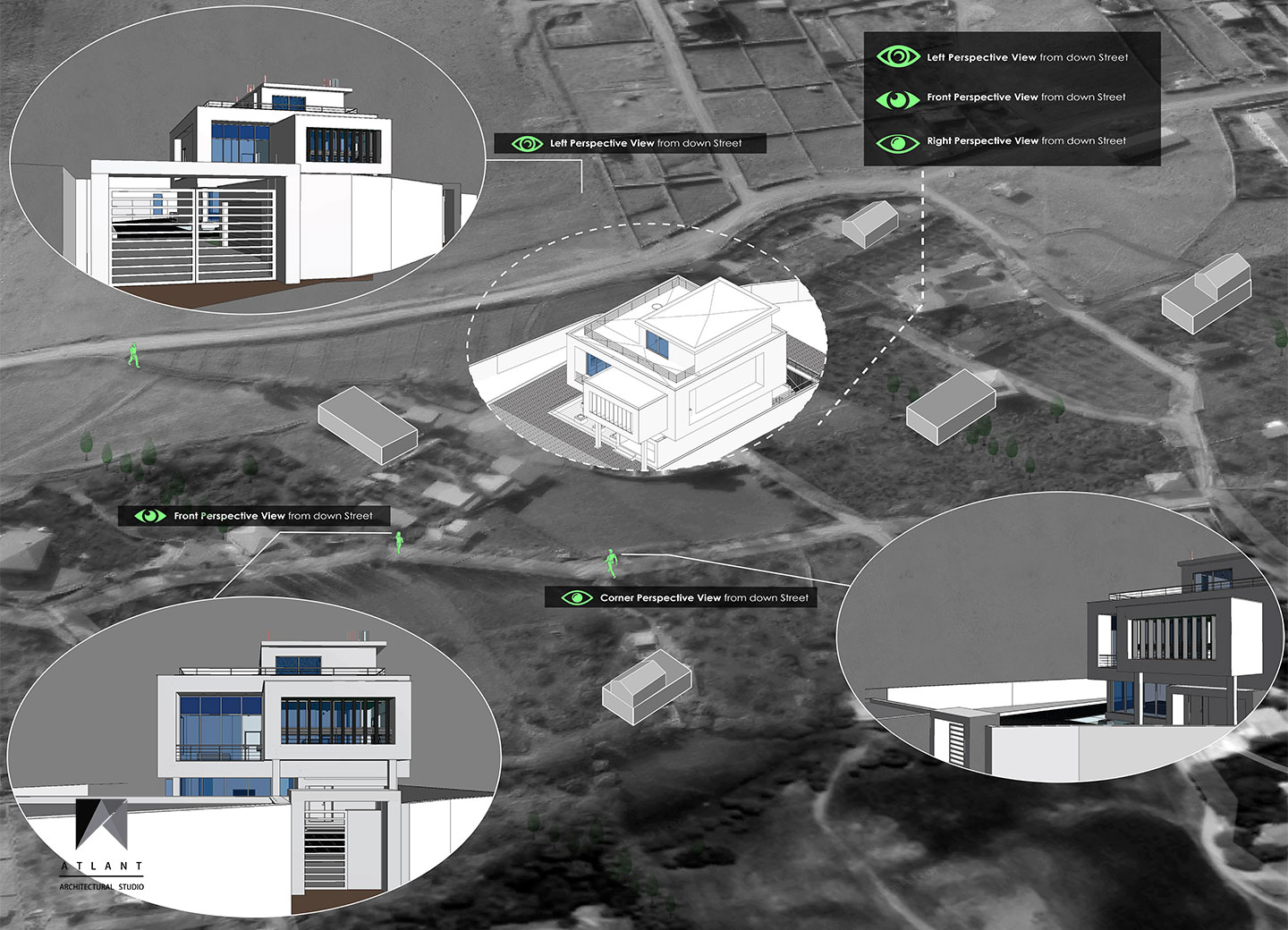
Rubik Villa is designed on a slightly sloped, relatively flat and small plot in the Kelardasht region of Mazandaran Province.
The need to avoid overlooking neighboring properties, along with the region’s strict height limits and restricted building footprint on the one hand, and factors such as the altitude, low groundwater level, and the area’s relatively cold climate on the other, have all shaped the fundamental requirements of this villa’s design.
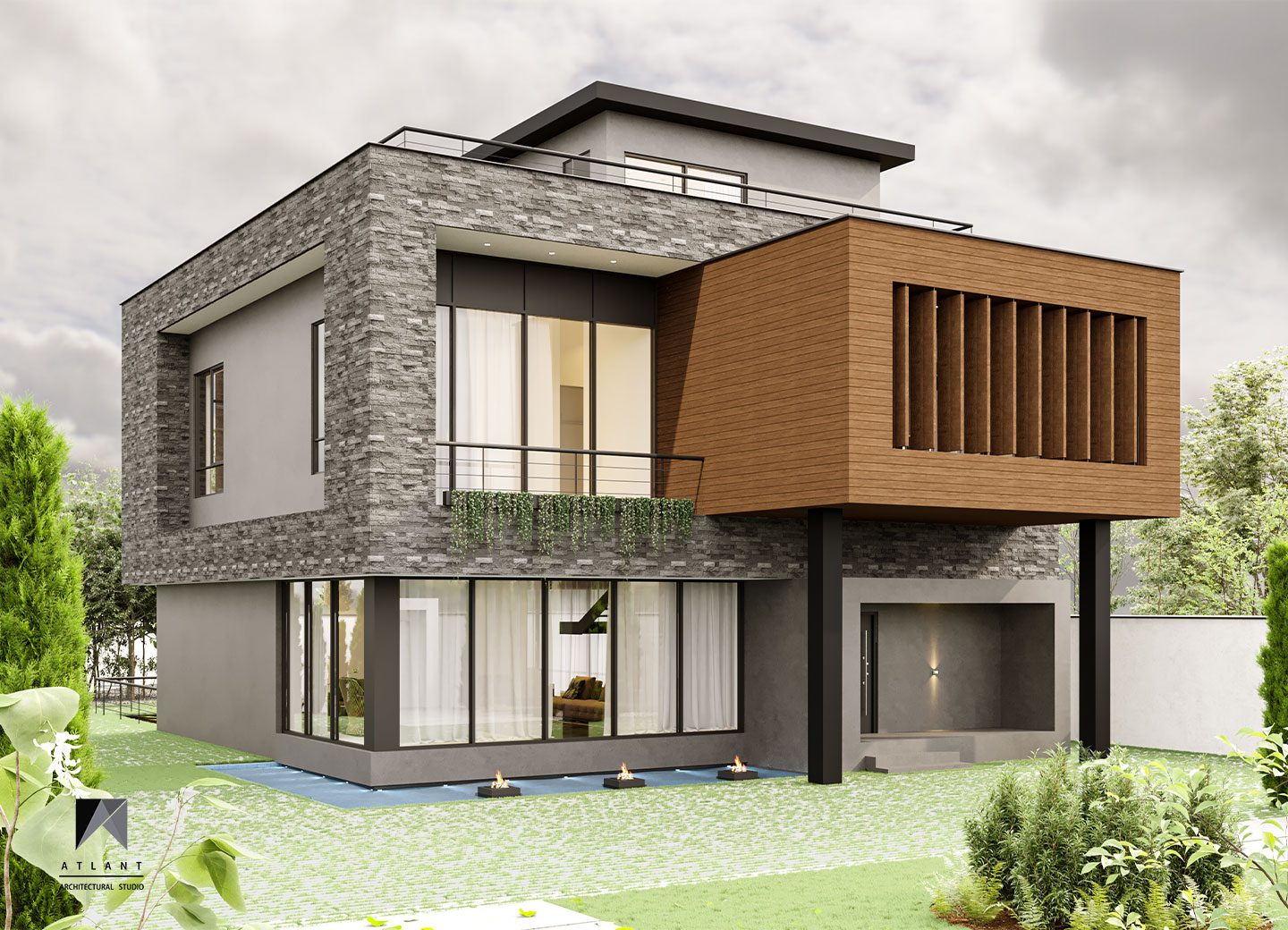
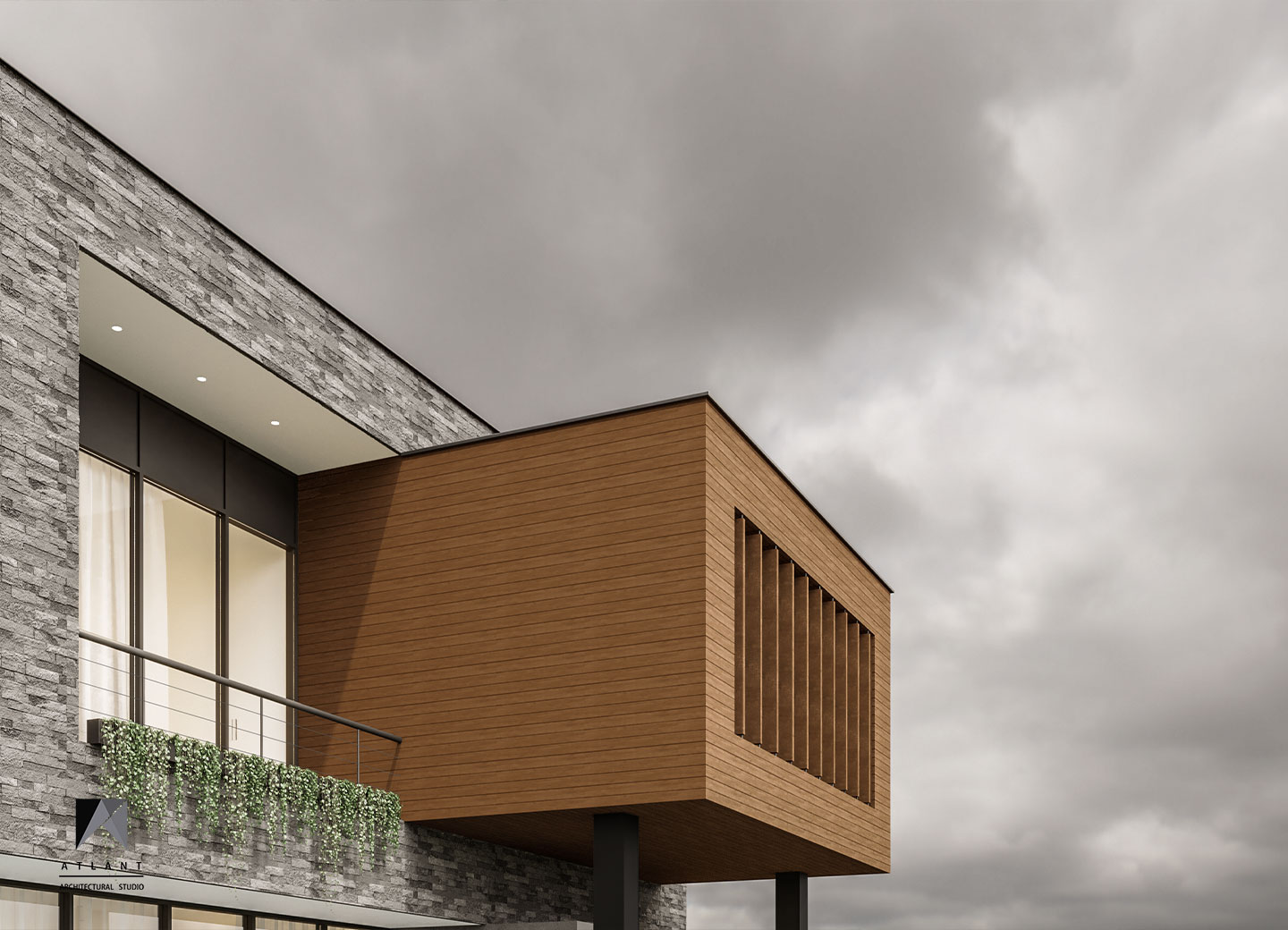
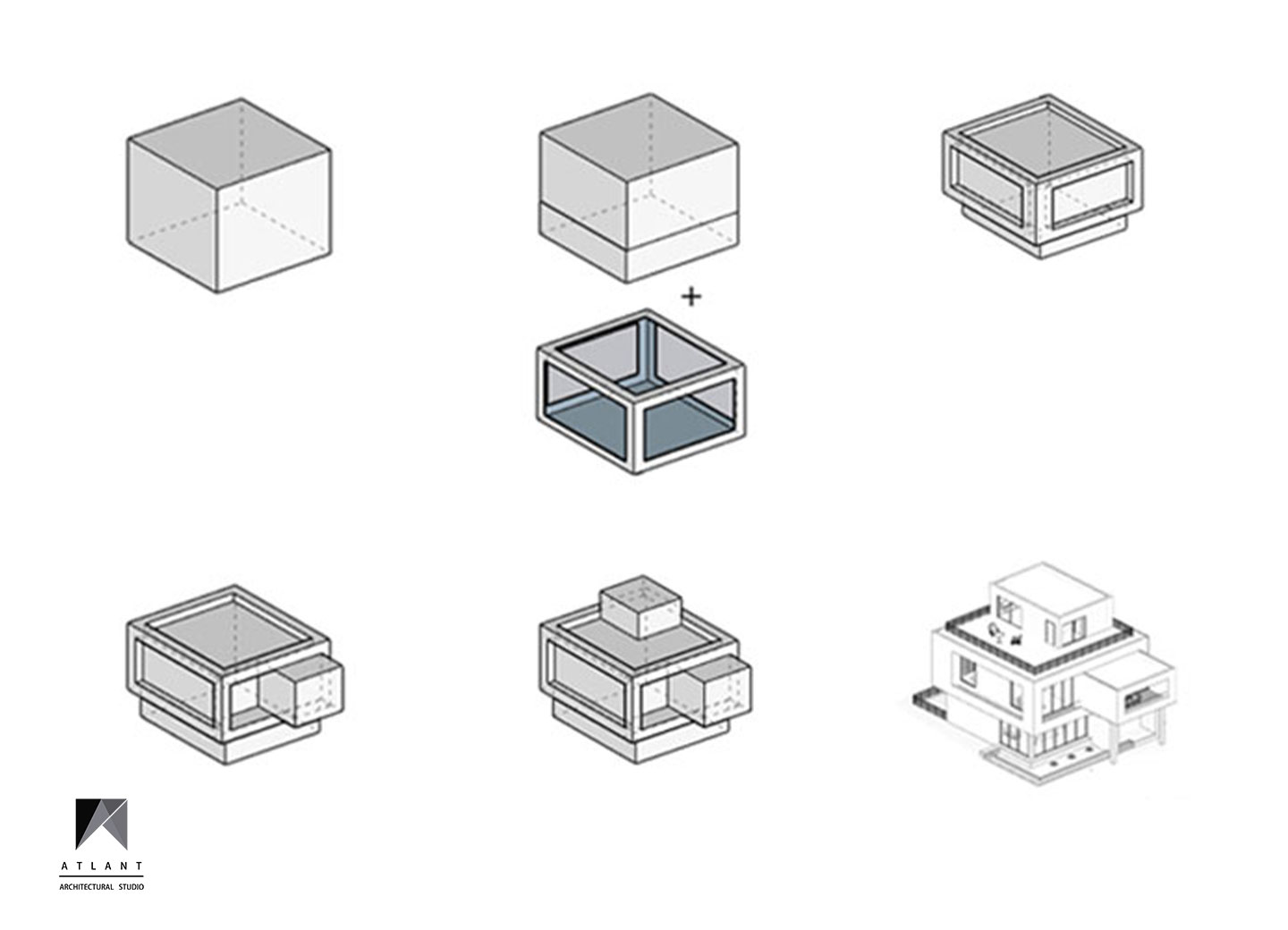
For the initial concept, the cube—considered the most functional geometric form in reducing the surface-to-volume ratio—was selected, complemented by shading elements and a cantilevered canopy at the entrance. Emphasis was also placed on greenery and the lush character of the region by creating a rooftop garden and framing views of the distinctive forested mountain landscape.
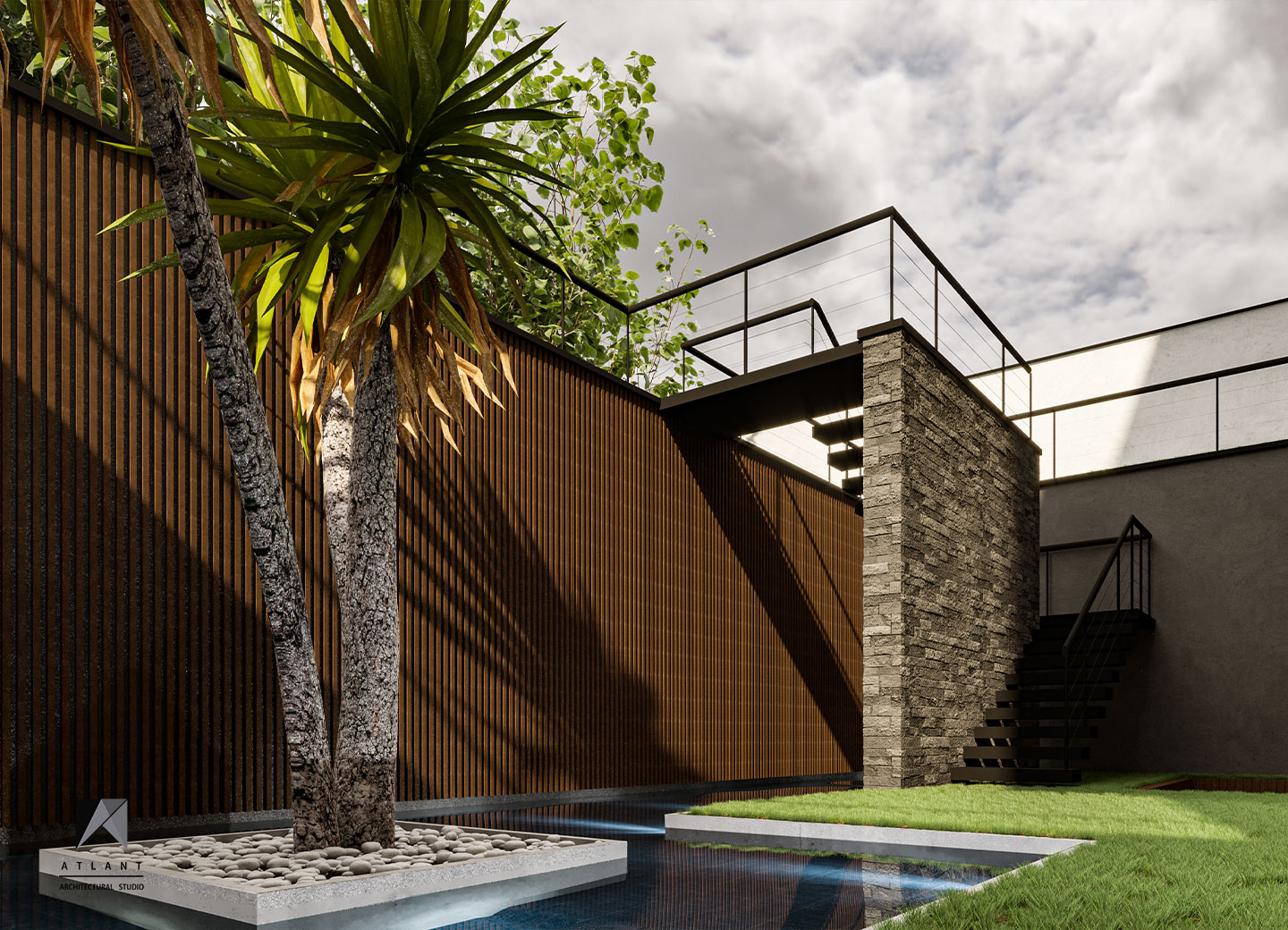
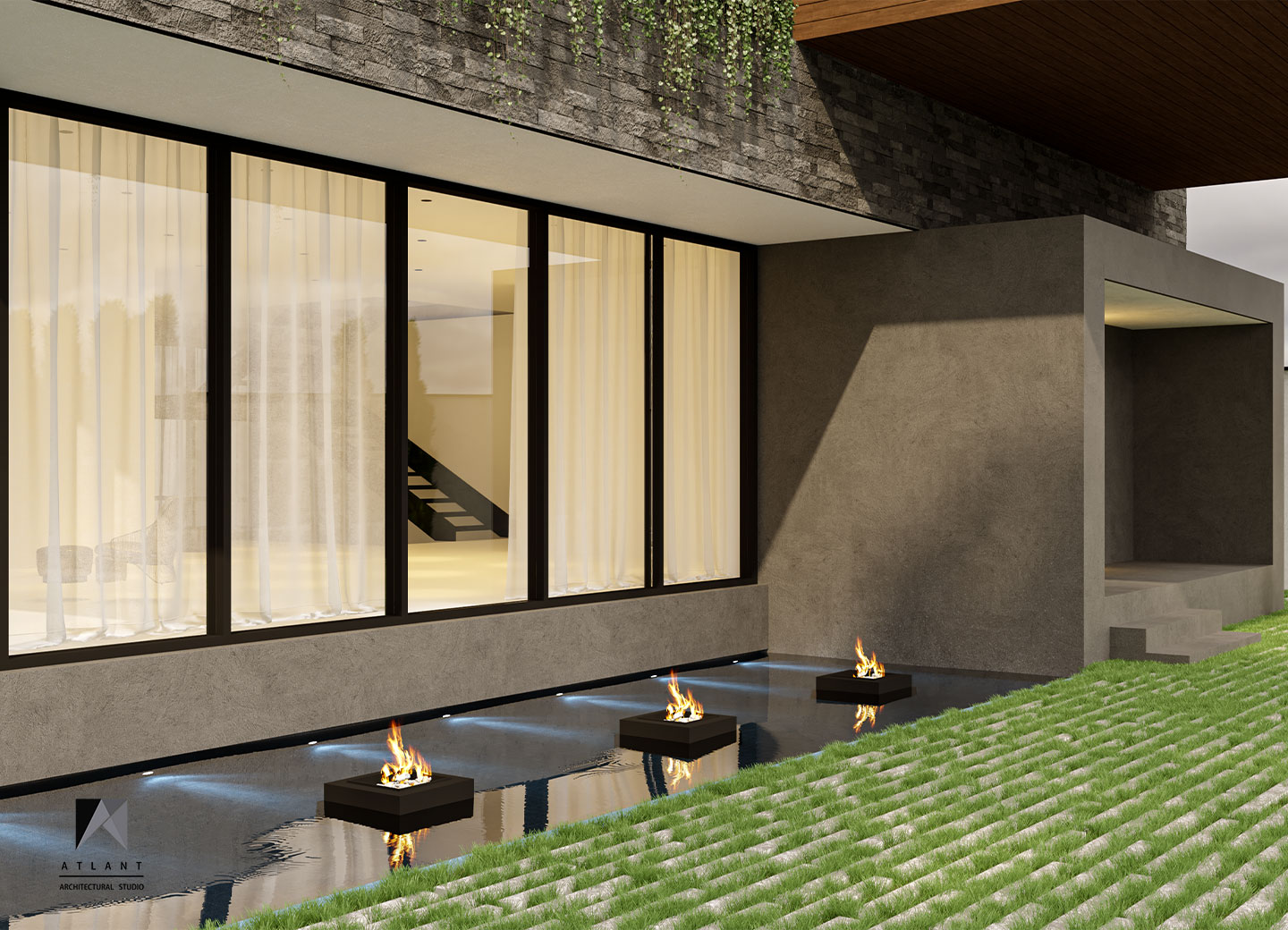
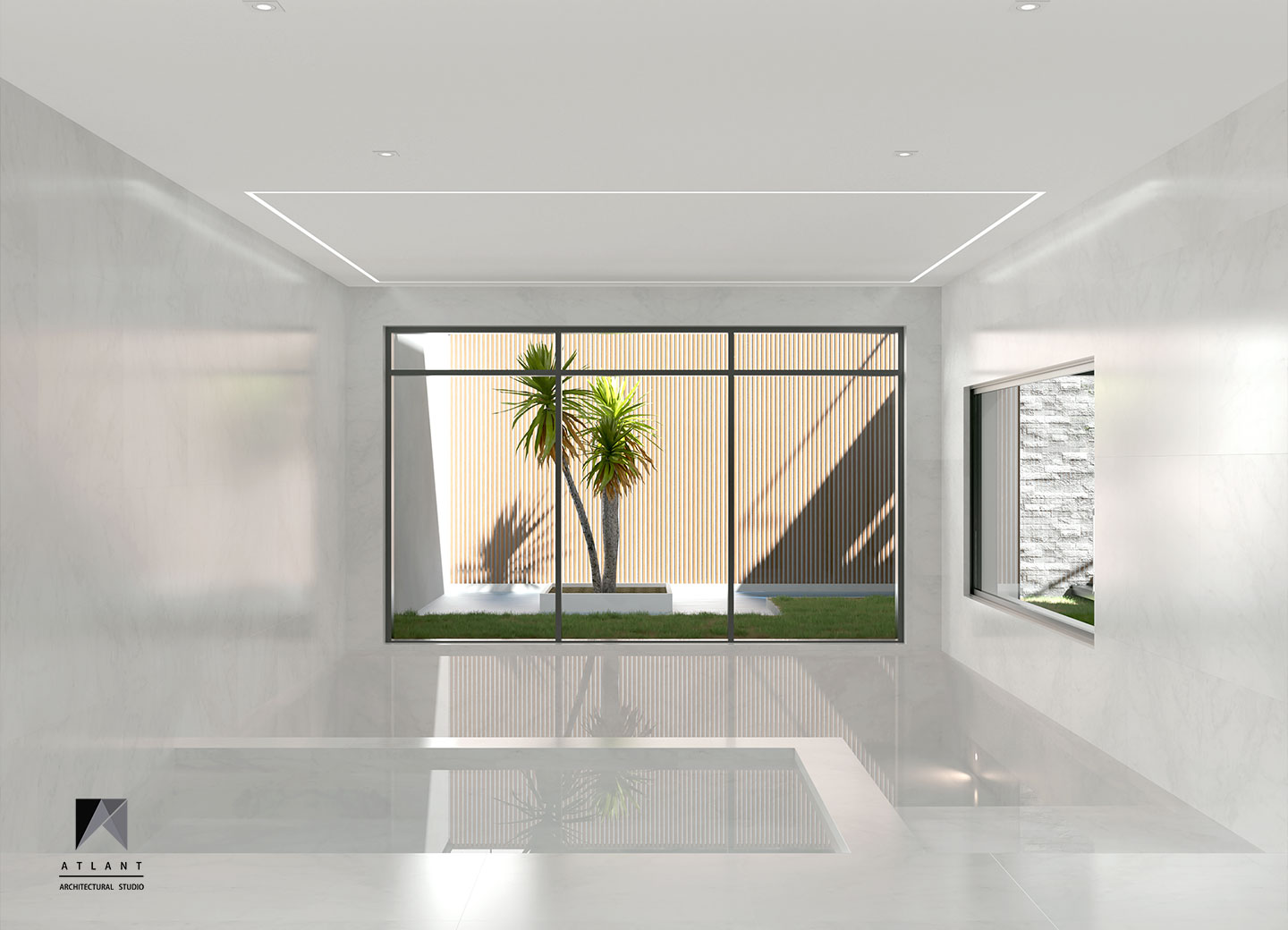
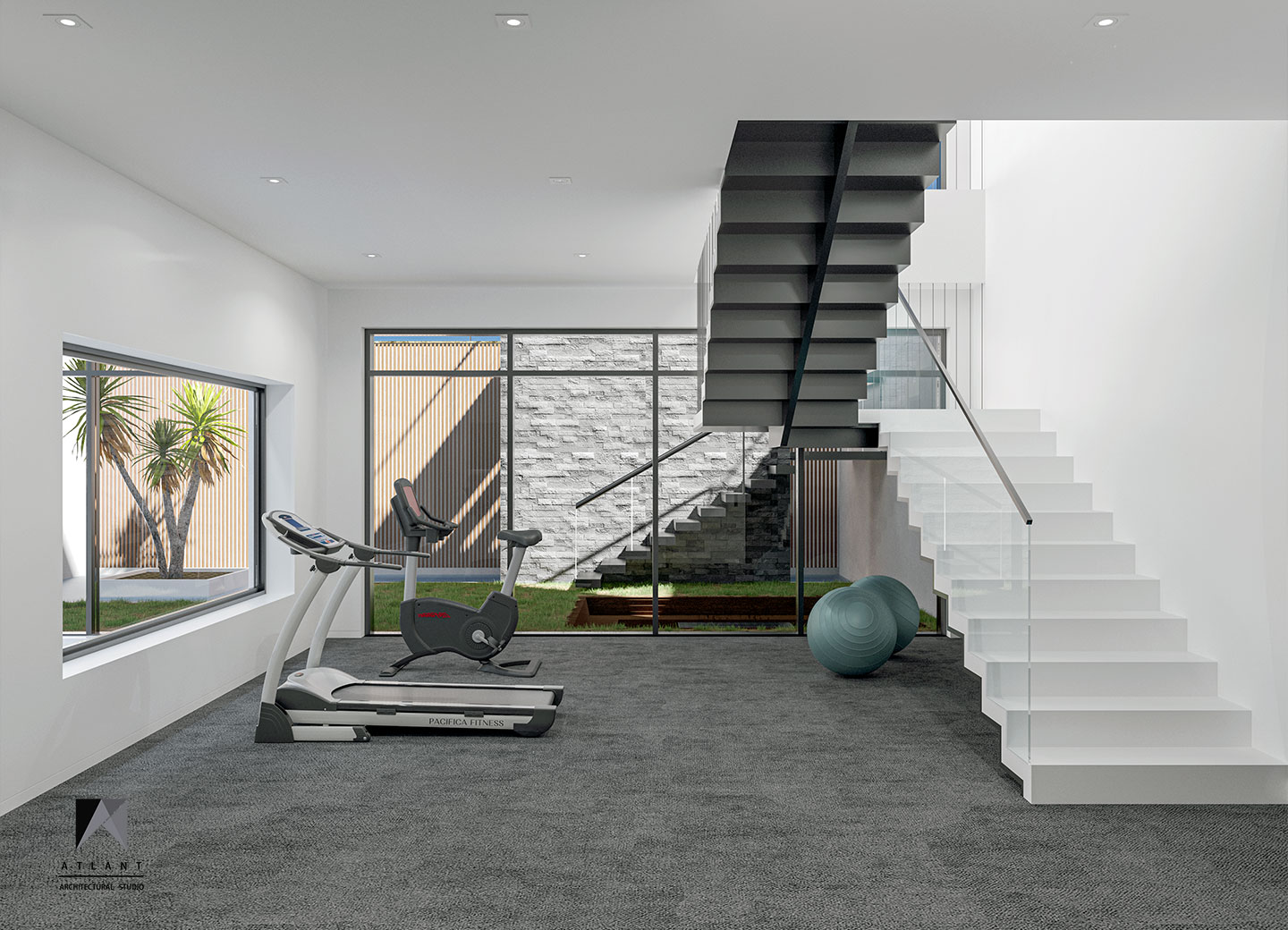
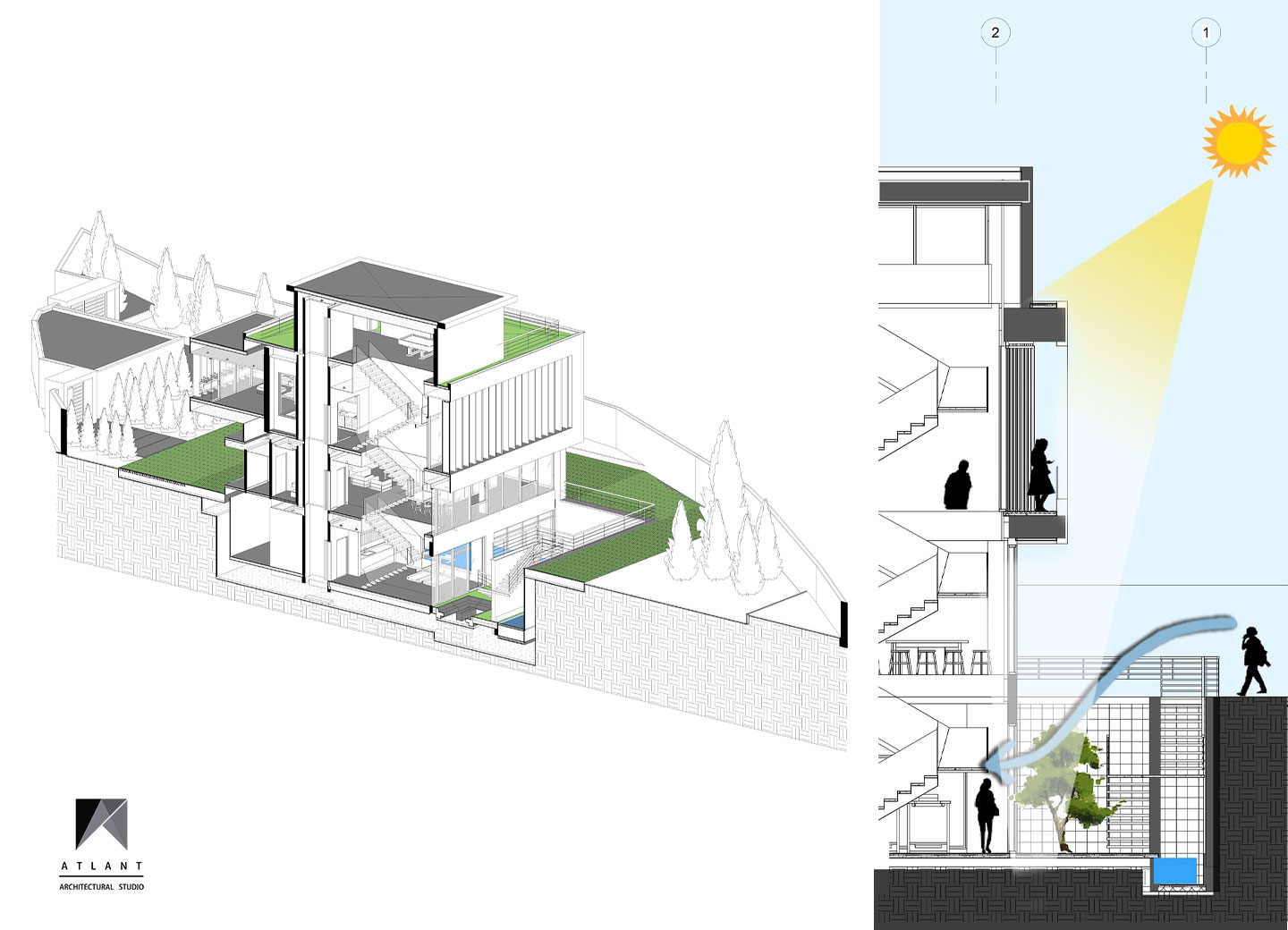
In the design of this villa, local materials were used to increase thermal inertia, while lowering the reflectivity (albedo) of the façades and carefully adjusting glazed openings to eliminate unwanted light and improve climatic and thermal comfort. To harness geothermal energy and reduce overall energy consumption, the swimming pool was relocated to the basement, where its natural light is provided directly from the south through a sunken garden. It is important to note that due to local height regulations, the maximum permitted height here is a single story, and the ground floor must be at least one meter above the reference ground level. The use of stone materials in the project ensures maximum harmony with the site and the region’s climatic characteristics.
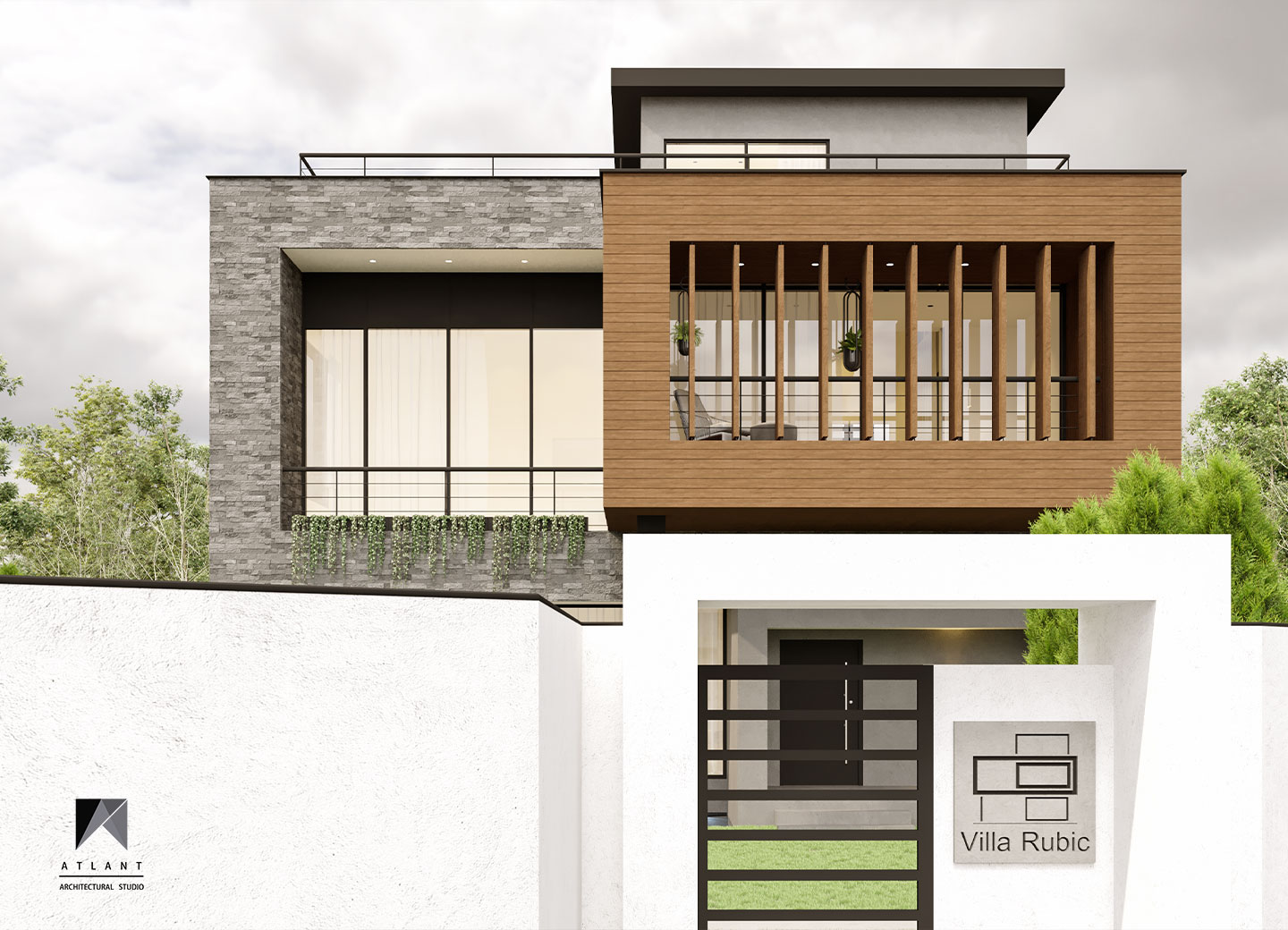
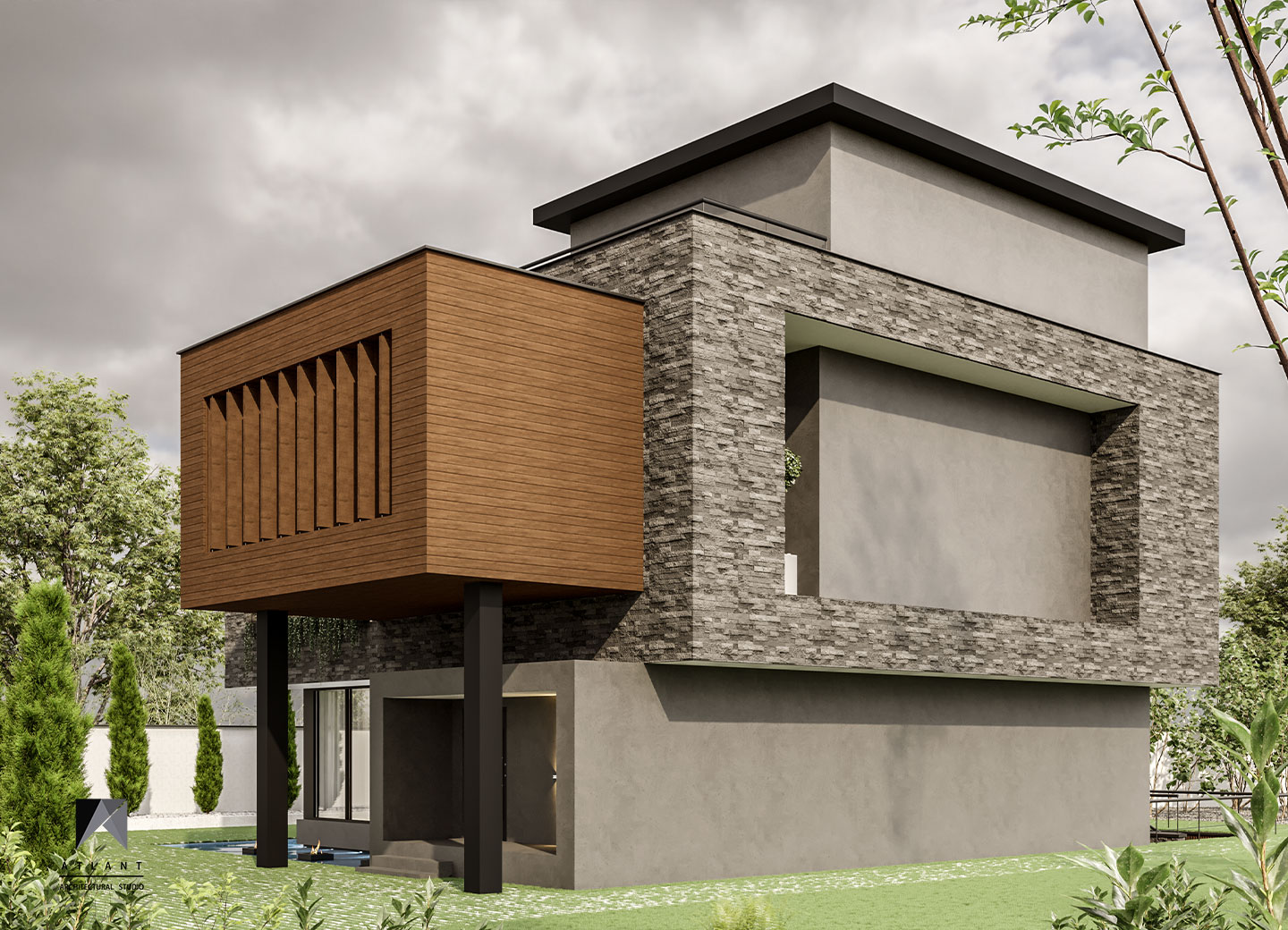
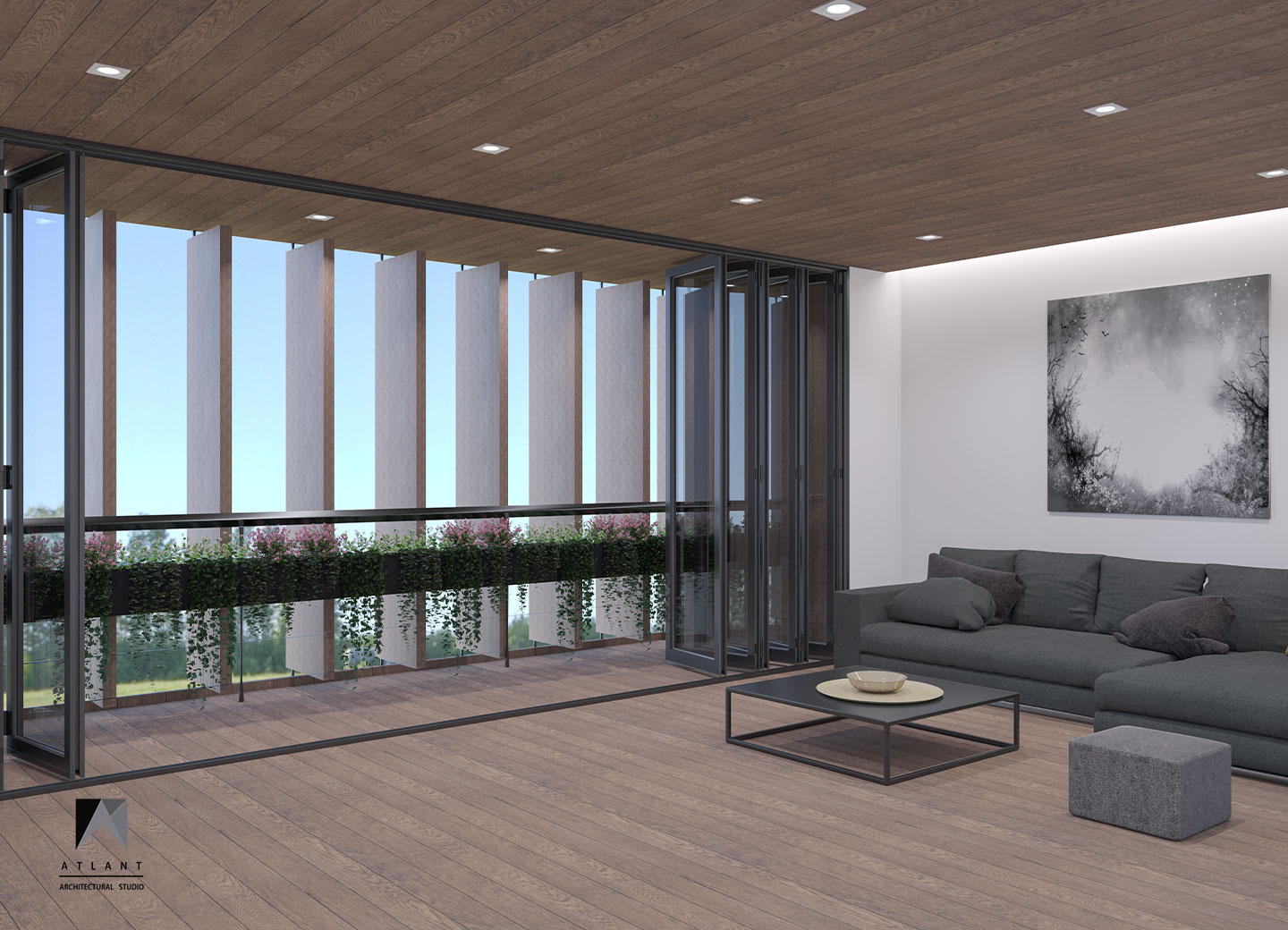
On the southern façade, the maximum allowable glazed surface has been designed, while the eastern façade incorporates openings to benefit from morning light, giving the building both optimal daylight and adequate visual permeability toward the adjacent street and surrounding landscape. Through simplifying the volumes and relying on basic geometric forms, the design aims to create an efficient, functional environment. The cantilevered section conveys the lightest possible form by relying on only two columns, further emphasized through the use of glass facades.
On the overlooking elevations, skylights were installed not only to bring in daylight but also to frame a tree as a green focal point, giving these skylights a more meaningful and nature-oriented function. A cubic projecting form on the first floor provides additional daylight without creating visual intrusion, and its wooden cladding reinforces the sense of connection to the local climate. Emphasis on views and landscape is further enhanced on the main southern elevation, which incorporates a glass grid system and balconies to create a sense of openness and transparency.